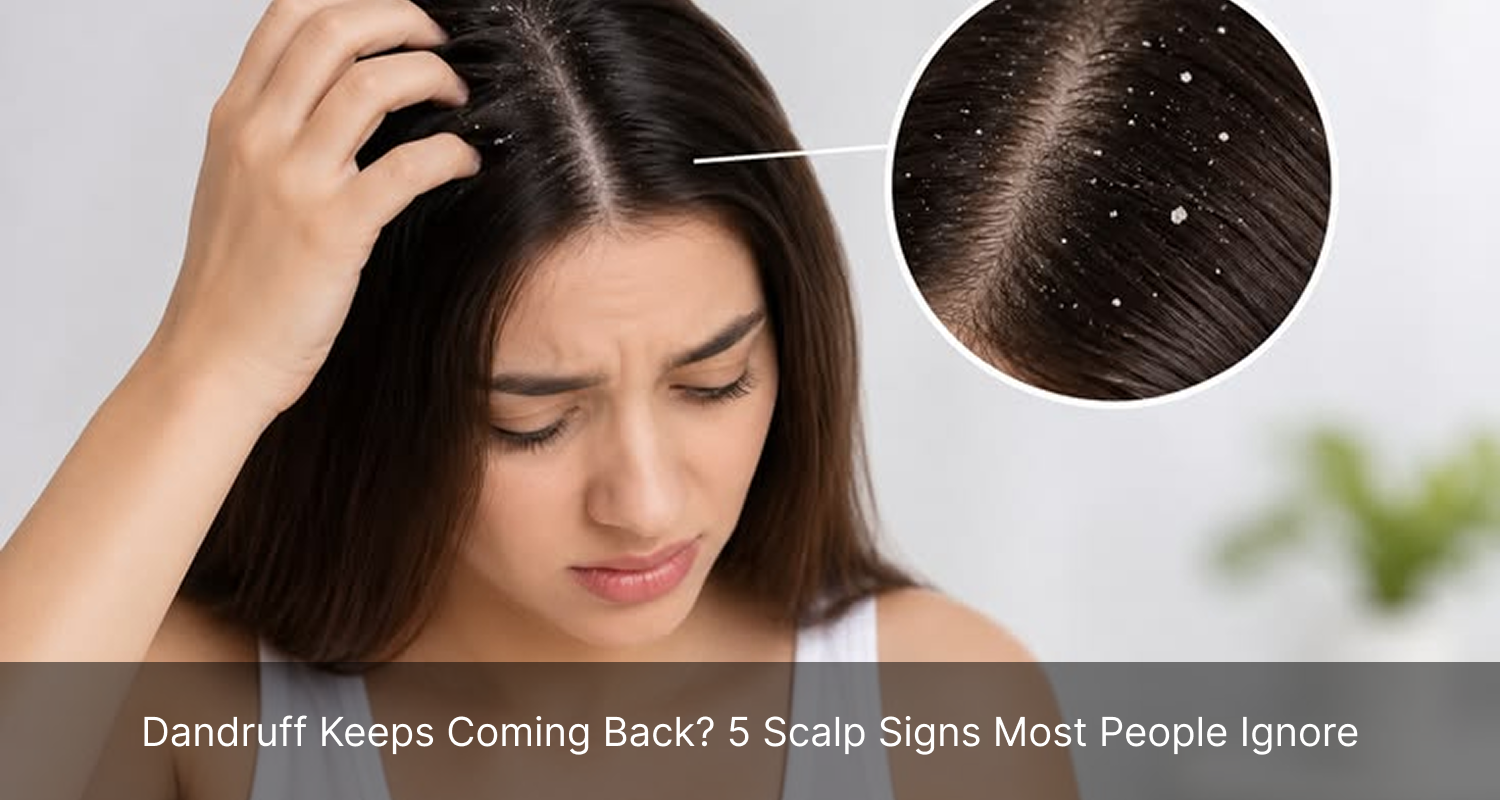
You wash your hair and the flakes disappear. A day or two later, the dandruff is back, so you change shampoo or wash more often without knowing why it keeps returning.
At A-WoW-Me, we look at the full scalp pattern instead of guessing from one symptom. Here is what to watch and when dandruff treatment may require a healthcare professional.
Why Does Dandruff Keep Coming Back?
Dandruff can be managed, but it may return. Mayo Clinic lists possible causes such as irritated oily skin, dry skin, product sensitivity and other skin conditions.
You May Be Treating the Wrong Problem
People often call every flake “dandruff.” Similar symptoms may come from dryness, oil, buildup, product sensitivity or a skin condition. A salon cannot diagnose a skin disease.
The Product May Not Be Used as Directed
Some people rinse dandruff shampoo off immediately or apply it mainly to the hair. The American Academy of Dermatology advises applying it to the scalp and following the bottle’s instructions, including any contact time. Stop if it causes burning, swelling or a rash.
Your Routine May Keep Irritating the Scalp
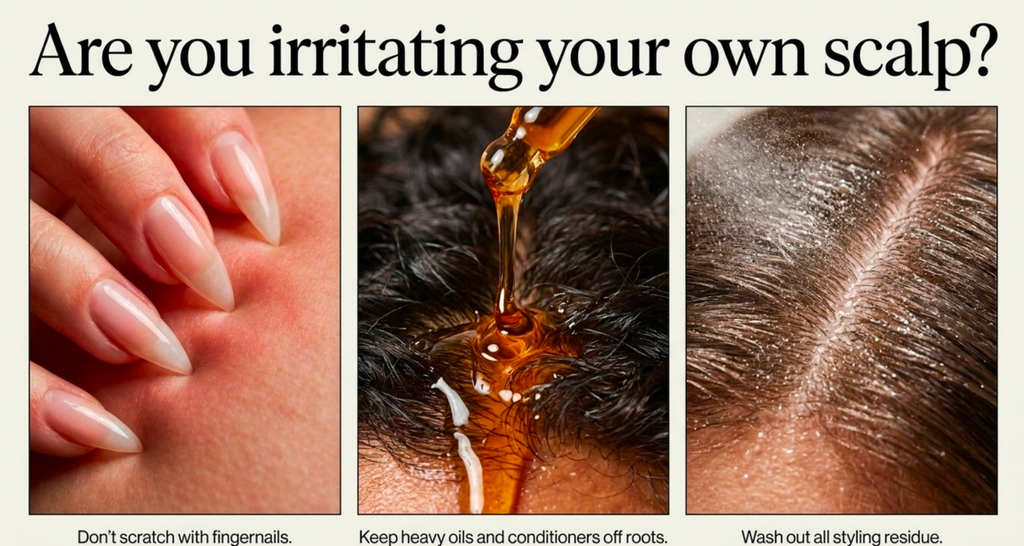
Review habits that may leave residue or cause irritation:
- Scratching with fingernails
- Applying heavy oil or conditioner to the roots
- Leaving styling residue on the scalp
Five Scalp Signs Most People Ignore
1. Flakes Return Soon After Washing
If flakes return within a day or two, note whether they are loose and dry or attached to oily areas.
2. Itching Comes with Redness or Burning
Pause new products if itching comes with redness, burning or tenderness. Avoid scratching because broken skin can increase discomfort.
3. Scaling Appears Around the Hairline or Ears
Check the hairline, behind the ears and near the eyebrows. Flaking that spreads beyond the scalp, becomes thick or forms crusts needs medical assessment.
4. The Problem Started After a New Product or Chemical Service
Think about recent changes such as a new shampoo, tonic, hair colour, chemical service or dry shampoo. Share this timeline during your consultation.
5. Flakes Come with Unusual Hair Shedding
Do not assume that flakes and loose hair mean you need a hair loss treatment or hair growth treatment. Sudden shedding, patchy loss, a widening parting or scalp pain needs medical assessment.
What Should You Do Before Changing Products Again?
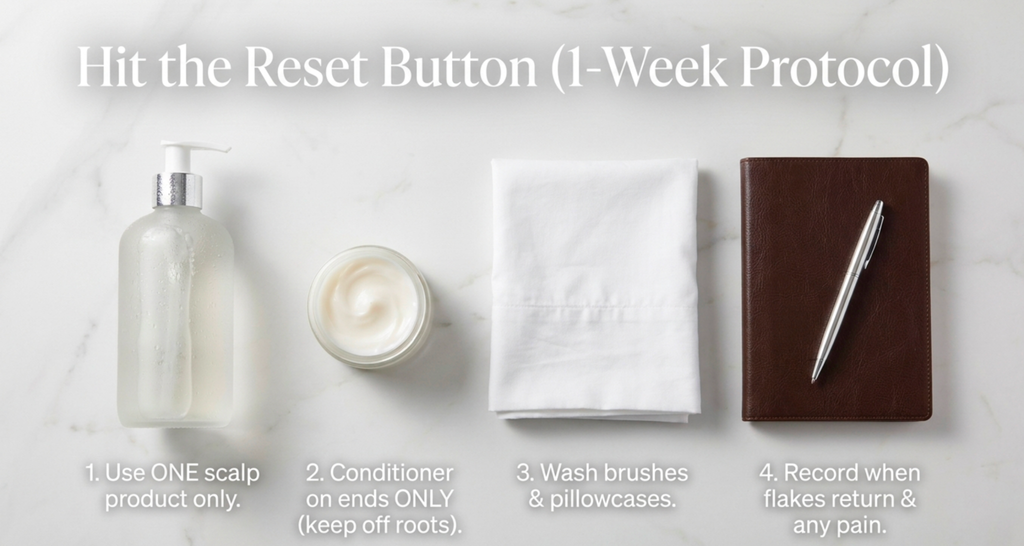
Try a simple one-week reset:
- Record when you wash, when flakes return and whether you feel pain.
- Use one scalp product at a time and follow its instructions.
- Keep conditioner off the roots unless it is made for the scalp.
- Clean brushes, pillowcases and reusable headwear.
If your main concerns are oiliness, flat roots or scalp odour, read our guide to the signs you may need a scalp treatment.
Can a Professional Scalp Treatment Help?

A professional scalp assessment may help when flakes appear with excess oil or buildup. A-WoW-Me’s SCP scalp care treatment focuses on cleansing buildup, stubborn dead skin and visible flakes.
Tell our team when the problem started, your recent products or chemical services, and whether you have pain or unusual shedding.
What Salon Scalp Care Cannot Do
A salon scalp treatment cannot diagnose skin disease, guarantee permanent dandruff removal, replace prescribed medication or confirm the cause of hair thinning.
For sudden or patchy hair loss, seek medical advice instead of choosing a package based only on the words “hair loss treatment” or “hair growth treatment.”
When Should You See a Dermatologist?
Arrange a medical assessment if you notice:
- Persistent dandruff despite correct home care
- Thick scales, crusts, sores, swelling or pus
- Intense itching that affects sleep
- Flaking on the face or other body areas
- Sudden or patchy hair loss
The American Academy of Dermatology advises seeing a dermatologist when dandruff does not improve or becomes severe.
Summary: Look at the Pattern, Not Just the Flakes
Recurring dandruff does not always mean your scalp is dirty. Check how quickly flakes return, whether there is redness or pain, what recently changed and whether you have unusual shedding. Surface-level buildup may benefit from professional scalp care, while persistent inflammation or hair loss needs medical assessment.
Ready to understand your scalp? Visit your nearest A-WoW-Me outlet for a consultation, or message our team with a scalp photo, your products and recent treatment history.