What Is the Difference Between Breakage and Shedding?
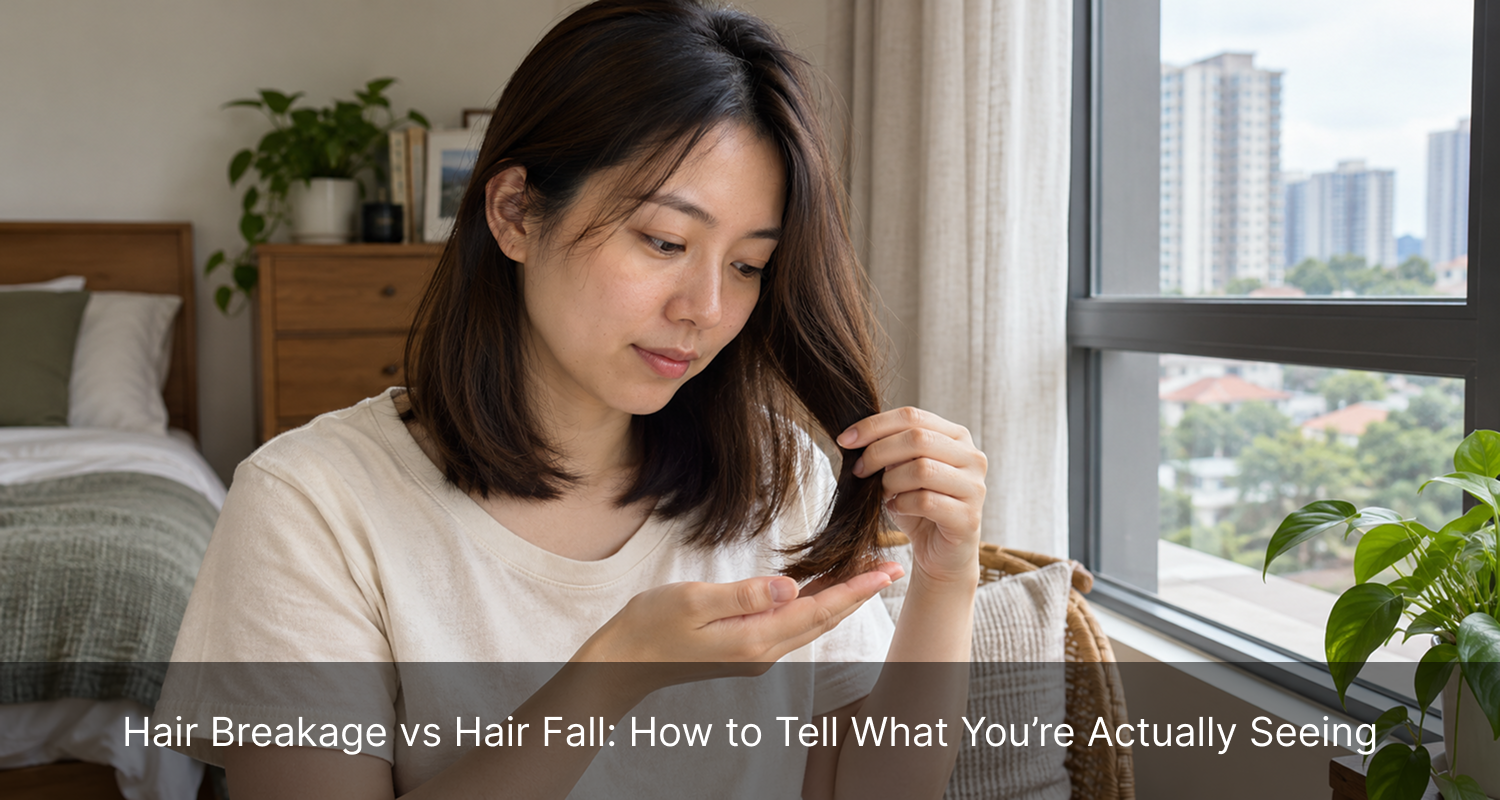
Breakage affects the hair fibre. Shedding involves a strand being released from the follicle. Both can happen together, and broken hairs can also occur with scalp conditions. The American Hair Loss Association explains why visual inspection alone may not establish a diagnosis.
| What you notice | What it may suggest | What it cannot confirm |
| Loose pieces much shorter than your usual hair length | Breakage may be contributing | Why the hair broke |
| Loose strands closer to your usual length | Shedding may be contributing | Whether shedding is excessive or its cause |
| Split or frayed ends on attached hair | Damage to the hair shaft | Whether you also have increased shedding |
| Short hairs around the hairline | Breakage, regrowth or a recent cut may be involved | Which explanation applies from length alone |
Use these observations to describe the concern, rather than to label yourself with a condition.
Does Hair in the Shower Mean You Have Hair Loss?
Not necessarily. Some shedding is part of the normal hair cycle. The American Academy of Dermatology distinguishes hair shedding from hair loss and notes that a dermatologist can determine which is happening, including when both occur.
Instead of judging a single shower, describe what has changed from your usual experience. Are you seeing more loose strands repeatedly? Does your part look wider? Are you mainly noticing shorter fragments after styling?
These are different observations. A photograph of the hair in your drain cannot answer all of them.
What Should You Notice Before a Consultation?
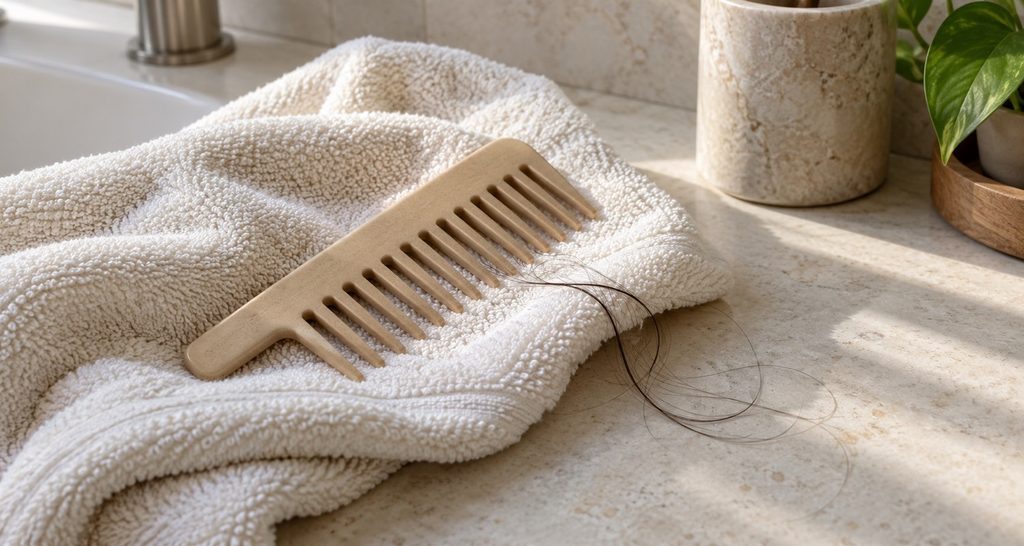
You do not need to pull out hairs or perform a home strength test. Prepare a few simple notes from your normal routine:
- Describe the loose hair. Is it mostly short pieces, longer strands or a mixture?
- Note where you notice it. On clothing, during detangling, after styling or while washing?
- Record recent changes. Include colouring, bleaching, straightening, heat styling, tight hairstyles and new products.
- Mention scalp symptoms separately. Itching, soreness or persistent flaking is useful information even when the ends also feel dry.
- Explain the trend. When did you first notice the change, and is it continuing?
A useful description is: “I am noticing short pieces after straightening, and the ends feel rough.” That gives a stylist more to discuss than simply saying, “My hair is falling.” If you are seeing progressive thinning, make that clear when seeking medical advice.
How Should You Care for Hair That Keeps Breaking?
Start by reviewing how the hair is handled. The American Academy of Dermatology’s advice on preventing hair damage includes using conditioner, avoiding vigorous towel rubbing, reducing heat and handling tangles gently. Detangling advice also differs by hair texture: straight hair and tightly curled hair should not automatically follow the same wet-brushing routine.
Choose a routine you can describe and maintain. Tell your stylist how often you use a straightener, whether you repeatedly colour already processed lengths, and which step feels hardest to manage. Ask which habit to change first and what cosmetic improvement is realistic.
For split ends, discuss a suitable trim and protection for the remaining lengths. Products can improve the feel and appearance of damaged hair, but they do not biologically heal a damaged hair shaft. This limitation is explained by the American Hair Loss Association.
Where Does Scalp Care Fit In?
Scalp comfort and the condition of your ends are separate questions. Greasy roots do not establish why a strand snapped, and a smoother finish does not prove that shedding has stopped.
If oiliness, flat roots or recurring scalp odour is your main concern, read our separate guide to signs you may need a scalp treatment. It covers a different question from identifying breakage.
A-WoW-Me lists SCP® Scalp Care Treatment, professional hair treatment and haircuts among its services. Ask the salon which cosmetic service, if any, suits your concern and what outcome to expect. A salon consultation does not establish the medical cause of hair loss.
When Should You Ask About Hair Loss Treatment?
If you notice sudden or patchy loss, a progressively widening part, or persistent scalp discomfort alongside changing hair density, seek a dermatologist’s assessment rather than choosing a treatment from a product claim. The American Hair Loss Association describes why the scalp and the pattern of breakage need to be examined together.
You can still discuss styling and cosmetic care with your salon. Make sure the medical concern is assessed by an appropriate healthcare professional.
Start With a Clearer Hair-Care Conversation
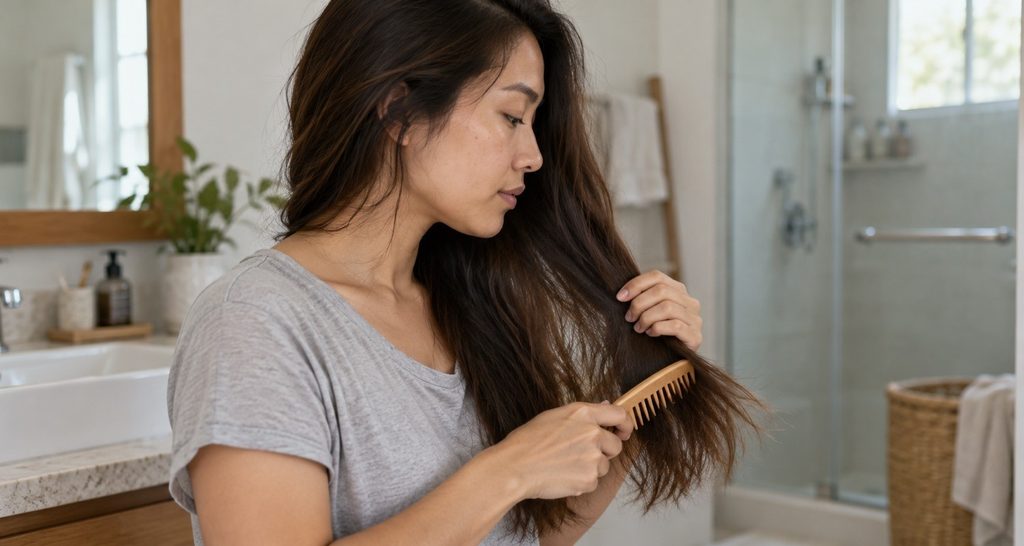
Before booking, write down three things: what you see, when you notice it and what recently changed in your routine.
For rough ends, styling concerns or questions about cosmetic hair and scalp care, find your nearest A-WoW-Me outlet and contact the salon to discuss suitable options. Bring your observations so the conversation starts with your actual concern.